By Ian Moriarty
October 29, 2026
A child’s bedroom should make sleep feel comfortable, predictable, and easy to settle into. When two children share a room, the bed also has to use space efficiently without making the room feel crowded. Bunk beds can help solve that problem, but the best choice depends on more than appearance. Parents should consider size, safety features, mattress fit, room layout, storage, and how the bed may serve the family as children grow.
Sleep needs are worth taking seriously. According to the National Sleep Foundation, 44% of U.S. children do not consistently get the recommended amount of sleep for their age. Furniture alone cannot determine how well a child sleeps, but a thoughtfully arranged bedroom can support a comfortable nighttime routine. Choosing bunk beds that fit the room, the children, and the mattresses is a practical place to start.
Measure the Bedroom Before Choosing a Bed
Before comparing finishes or styles, measure the bedroom carefully. Record the room’s length, width, and ceiling height, then note doors, windows, closets, radiators, vents, and ceiling fixtures. The bed needs to fit without blocking circulation or making it difficult to access storage.
Ceiling clearance is especially important for the upper bunk. A child should have enough room to get in and out without repeatedly bumping into the ceiling. Ceiling fans or hanging light fixtures also need to be considered because an elevated mattress brings the sleeper closer to anything overhead.
BEDZ carries twin-over-twin, twin-over-full, and full-over-full configurations, along with lofted designs.
Make Safety Features a Priority
Bunk bed safety depends on using the product as designed. The U.S. Consumer Product Safety Commission requires upper bunks to include guardrails and sets requirements intended to reduce entrapment hazards. Federal instructions for children’s bunk beds also warn that children under six should not use the upper bunk.
Parents should follow the manufacturer’s age, weight, assembly, and use instructions for the exact model they purchase. Guardrails, ladders, slats, fasteners, and connectors should be installed as directed and checked periodically for looseness or damage.
BEDZ notes that its models include safety-focused features such as guardrails, secure ladders, and sturdy construction. Some models have significantly different weight capacities, so families should verify the specification for the individual bed rather than assuming all models are alike.
Match the Mattress to the Bed
The mattress is part of the bunk bed’s safety system, especially on the upper level. A mattress that is too thick can reduce the effective height of the guardrail, while one that is too small can leave unwanted gaps around the sleeping surface.
Federal instructions must state the intended mattress size and maximum mattress thickness. Parents should use those specifications when selecting a mattress instead of relying only on whether it is labeled twin or full.
Comfort matters too. Consider the child’s preferred firmness, sleeping position, and any practical needs such as ease of changing sheets. BEDZ sells mattresses, giving families an opportunity to compare the bed and mattress as parts of one setup.
Consider How Children Will Reach the Upper Bunk
A ladder may look like a small design detail, but children will use it every day. Consider whether the ladder is straight, angled, built into the frame, or replaced by a stair-style configuration. The right option depends on the room and the child who will use the upper level.
Stairs typically require more floor area but may feel easier for some children to navigate. A vertical ladder can preserve more room but requires confident climbing. Either way, the path to the bed should remain clear of toys, bags, cords, and other obstacles.
BEDZ carries traditional ladder models as well as stair-step bunk beds. Comparing the access style is useful before choosing among bunk beds that otherwise have similar mattress sizes and finishes.
Use the Extra Floor Space Thoughtfully
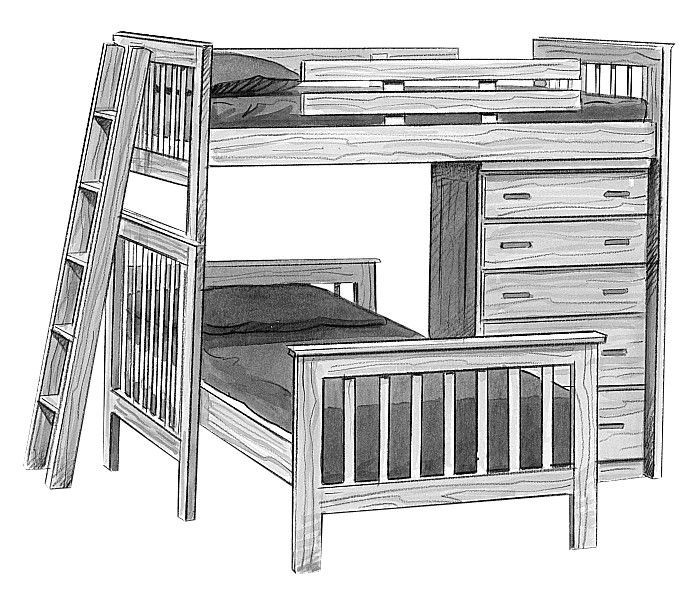
One major advantage of stacked sleeping is the floor area it can leave open for other uses. That extra room might become a play space, reading area, dresser location, or homework zone. Some models take the idea further by integrating drawers, shelving, desks, or trundles directly into the frame.
BEDZ offers models with built-in storage and desk options. These features can be especially useful in shared or smaller rooms where adding several separate pieces of furniture would make movement difficult.
Drawers need enough clearance to open, shelves should be accessible, and desk chairs need space to pull back. Measuring those functional clearances helps ensure the room works after the furniture arrives.
Think About How the Bed Can Adapt as Children Grow
Children’s needs change, so it can be helpful to think beyond the next year. Some models can separate into individual beds, which may give families more flexibility if children eventually move into different rooms or if the layout changes.
BEDZ notes that many of its models are designed to split into separate beds, although this feature is not universal. Parents should check the individual product specifications before purchasing if convertibility is important.
Size is another long-term consideration. Twin-over-twin may work well for younger children and compact rooms, while twin-over-full or full-over-full configurations can provide a larger sleeping surface. BEDZ also lists larger configurations among its available options, making it possible to compare several arrangements within one store.
Create a Bedroom That Supports Rest
A comfortable sleep environment depends on more than the frame. Bedding should fit properly and be easy to manage. Room-darkening window treatments, appropriate lighting, and a comfortable room temperature can also help create a space that feels ready for rest.
The National Sleep Foundation recommends a consistent sleep and wake schedule, a device-free period before bedtime, and a cool, dark, quiet bedroom. Those habits can work alongside a comfortable bed rather than being treated as separate concerns.
For children who read before bed, place lighting where it can be used safely without loose cords becoming tangled around the ladder or frame. Keep toys and play activities from encouraging climbing or roughhousing on the bunks, and follow manufacturer guidance about how each level should be used.
Give Each Child Some Personal Space
Shared bedrooms work better when each child has some personal space. Even when two beds are stacked, small differences in bedding, wall decor, storage bins, or reading lights can help each sleeping area feel individual.
Parents should also think about who will occupy each level. Age, climbing ability, nighttime bathroom trips, and comfort with heights may all influence which child uses the upper bunk. The lower bunk may be more practical for a younger child or one who frequently gets up at night.
The goal is not simply to fit two mattresses into less floor space. The arrangement should make bedtime manageable and help the room remain comfortable during the day.
Compare Options With the Whole Room in Mind
BEDZ serves West Michigan with a large selection of bedroom furniture and offers models in solid wood, engineered wood, and metal designs. The company’s bunk bed collection includes multiple sizes, finishes, storage configurations, desk options, and styles for children, teens, and guests.
The retailer also offers in-store pickup and White Glove Delivery with professional setup, along with manufacturer warranties and financing options. Its team has more than 30 years of combined experience helping customers select bedroom furniture and mattresses.
For families comparing bunk beds, the strongest choice is the one that fits the room, accommodates the correct mattress, provides appropriate safety features, and suits the children who will use it. Measuring carefully and reviewing the manufacturer’s specifications before purchasing can help create a sleep space that is comfortable, practical, and easier to live with every day.